Expert Directional Drilling Services in Watertown, WI
Watertown sits at the western edge of our service area, straddling the Jefferson and Dodge County line where the Rock River cuts through the city. The mix of property types here is different from the Waukesha County cities closer to our Dousman base. Watertown has a working downtown, established residential neighborhoods on both sides of the river, agricultural acreage that starts almost immediately outside the city limits, and a steady volume of rural residential and small farm properties along Highway 26, Highway 16, and the county roads radiating out from the city. Directional Drilling matters across all of those property types, though the specific application varies. Directional Drilling on the agricultural parcels around Watertown looks different from Directional Drilling on a finished urban lot near the courthouse, and we plan each project accordingly.
Herr Well Drilling has been working in the Watertown corridor since the 1980s, and the family business has been drilling wells across southeastern Wisconsin since 1964. Our directional drilling capability is part of a larger operation that handles vertical well drilling, well service, and the full range of underground work for residential, agricultural, and commercial property owners.
What We Do
Our Watertown directional drilling work includes horizontal directional drilling for trenchless utility installation, angled well drilling for offset aquifer access, obstacle avoidance drilling on sites with subsurface complications, precision water source targeting on parcels where geological evaluation indicates an offset productive zone, minimal surface disturbance drilling near wetlands or sensitive features, and underground directional drilling for service line work and utility extensions.
Agricultural directional projects are a larger share of the Watertown workload than they are in the more urban parts of our service area. Running water service to outbuildings, installing irrigation system infrastructure beneath cropland, and crossing field roads or drainage features with utility lines are recurring scopes on the farms and rural residential parcels around the city. Trenchless drilling avoids the disruption to crop rotation, drainage, or field operations that open trenching would cause.
What Drives Directional Work in This Area
The geology beneath Watertown is glacial, with deposits of clay, sand, and gravel of varying composition sitting over fractured Niagara dolomite bedrock. The Rock River corridor and the lower-lying areas around it have soil conditions and water table characteristics distinct from the higher ground further from the river. Properties along the river or its tributaries often have shallower water tables and more variable subsurface conditions, which affects bore path planning on directional projects in those zones.
The other significant driver is the agricultural land use throughout the area. Farmland that is actively in production cannot easily accept open-cut excavation for utility installations. Trenchless drilling allows lines to be installed without disturbing crop production or interrupting the timing of field operations. We have completed directional installations on Watertown-area farms where the only visible evidence after the work was a small disturbed area at each end of the bore.
Rural well drilling around Watertown often involves precision water source targeting because the productive aquifer zones in the underlying dolomite are not uniformly distributed. On certain parcels, the most productive interval is offset from the available surface drilling location, which calls for angled well drilling rather than a straight vertical bore. We have drilled enough wells across this part of the state to know which areas typically yield reliably from vertical drilling and which need a directed approach.
Key Benefits
Access to constrained locations
Where vertical drilling is not viable due to surface obstructions or subsurface geology.
Minimal surface disturbance
Pavement, landscaping, and finished site features remain undisturbed throughout the project.
Obstacle avoidance
Subsurface boulders, buried utilities, old casings, and existing foundations can be navigated around rather than stopped at.
Precision water source targeting
Geological evaluation identifies productive aquifer zones, and the drill path is designed to reach them accurately.
Trenchless utility installation
Utilities are installed without open-cut disruption to roads, driveways, or finished surfaces.
Applicable across property types
Residential, commercial, agricultural, and utility projects all within scope.
Featured Services
Horizontal Directional Drilling for Rural and Urban Watertown Sites
Horizontal directional drilling on a Watertown project might mean a utility crossing beneath a county road to reach a rural building site, a service line installation beneath finished landscaping on a residential lot in the city, a fiber or conduit run beneath the Rock River, or a trenchless utility installation on a commercial property near downtown. The technique is consistent. The bore enters at a planned location, runs at depth beneath the surface, and exits at the target. The product line gets pulled through, and the surface above the bore remains intact. Each application differs in scale and bore length, but the underlying horizontal drilling capability is the same.
Angled Well Drilling for Productive Aquifer Access
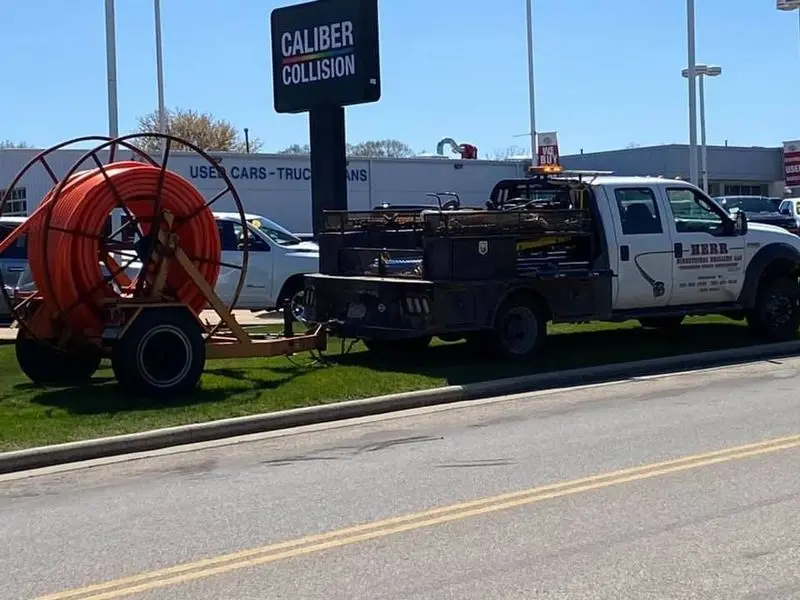
Angled well drilling on a Watertown parcel typically responds to one of two conditions. Either the surface entry point available is offset from the productive aquifer zone below, or the bedrock geology produces a higher-yield zone along an angled fracture that vertical drilling would miss. The bore path planning on an angled well requires accurate subsurface evaluation and continuous depth and direction monitoring throughout the drilling sequence. Our equipment is built specifically for this work, and the operators have run the same equipment on enough wells across this region to know what to expect from the formations.
Obstacle Avoidance Drilling on Rural Parcels With History
Rural properties around Watertown sometimes hold subsurface complications that the current owner does not know about. Old hand-dug wells from previous farm operations, abandoned sand point wells, buried fuel tanks from removed equipment, and field tile from decades of drainage work all show up regularly. A vertical drill stops at any of these. Obstacle avoidance drilling allows the bore to be redirected around the obstruction and continued to the target zone. The project completes without relocating to a less suitable spot on the parcel.
Trenchless Utility Installation for Farm and Residential Service Lines
Service line installations on Watertown-area farms and rural residential properties often need to cross field roads, drainage features, established landscaping, or driveways. Open-cut trenching disrupts whatever crosses the bore path. Trenchless utility installation runs the new line beneath the surface with minimal disturbance. For farm properties, that means crop rotation and field operations continue without interruption. For residential properties, finished surfaces and landscaping remain intact.
Why Watertown Property Owners Work With Herr Well Drilling
The family has been in the well drilling business since John Herr Sr. started the operation out of Dousman in the 1960s. Four generations later, the company is run by Nathan, Adam, DJ, and Kendel Domres. The current owners grew up in this business and have worked across the Watertown corridor since well before they took over ownership. That continuity of family involvement is what backs the work, not a marketing claim.
We are licensed Wisconsin well drillers, fully insured, and accountable for the projects we take on. The same crew that planned the bore is the crew that runs it. That continuity from planning through execution is a practical advantage on directional projects, where conditions encountered during drilling often require judgment calls that planning could not anticipate.
Key Benefits
The reasons a Watertown-area property owner calls a directional drilling company are usually direct. A vertical drilling project has stopped on an obstacle. A planned utility installation needs to cross under a road or field without disrupting operations. A new well needs to reach an aquifer zone that is offset from the available surface drilling location. A water service line needs replacement on a property where excavation would cause more disruption than the line itself is worth. Directional drilling addresses all of those situations.
The practical benefits include preservation of finished surfaces, intact field operations during farm utility work, the ability to navigate around buried obstacles, access to offset aquifer zones, reduced surface restoration costs, and the ability to complete projects that would otherwise have to be abandoned or relocated. For agricultural property owners specifically, the avoided disruption to crop production and drainage is often the deciding factor. For residential and commercial owners, restoration cost avoidance typically drives the decision.
A property owner searching for directional drilling near me from the Watertown area is generally trying to solve a specific problem. We address the specific problem, not a generic version of it.
Service Areas
Herr Well Drilling provides directional drilling services in Watertown and the surrounding area, including Lake Mills, Johnson Creek, Ixonia, Oconomowoc, Jefferson, and the rural townships across Jefferson and Dodge counties. Our service territory covers a fifty-mile radius of Dousman, reaching west to the Watertown corridor and beyond as project scope allows.
Frequently Asked Questions
What kinds of properties around Watertown most often need directional drilling?
Three categories cover the bulk of our Watertown directional work. Agricultural and rural residential parcels that need utility installations crossing field roads or drainage features. Properties where a previous well drilling attempt encountered subsurface obstacles that vertical drilling could not navigate. And residential properties in the city of Watertown where service line installations would otherwise require excavation of finished landscaping or pavement.
How does the Rock River corridor affect directional drilling projects in Watertown?
Properties along or near the Rock River have shallower water tables and more variable subsurface conditions than properties on higher ground further from the river. Bore path planning accounts for that, particularly for trenchless utility installations that have to remain at a consistent depth across variable soil conditions. Our equipment handles the range of conditions encountered along the river corridor.
Can horizontal directional drilling cross a Watertown field road without disrupting farm operations?
Yes. Trenchless installation across field roads is a routine scope. The bore runs beneath the road at depth, the line is pulled through, and the road surface stays intact. Field operations continue without the interruption that an open-cut crossing would cause. We have completed these crossings on Watertown-area farms during active growing seasons without affecting field work.
Does directional drilling near Watertown cost more than conventional vertical well drilling?
Directional drilling generally costs more per linear foot than vertical drilling because the equipment and technique are more specialized. The comparison that matters for most Watertown projects is not against vertical drilling on the same site but against the alternative of not being able to complete the project at all or against the full cost of open-cut excavation, including surface restoration. On most agricultural and many residential projects, directional drilling is the more practical investment overall.
What permits does a directional drilling project in Watertown require?
New well installations require a Wisconsin DNR permit. Utility crossings under county roads or state highways require permits from the appropriate jurisdiction. Some projects near the Rock River or its tributaries may require additional environmental review. We coordinate all required permitting on every project before drilling begins.
How does precision water source targeting work on a Watertown property?
Precision water source targeting starts with geological evaluation of the subsurface beneath the property, drawing on available data and any prior drilling history in the immediate area. The evaluation identifies the most productive aquifer zone. The bore path is then designed to reach that zone accurately, accounting for any offset from the available surface entry point. The technique applies on Watertown parcels where vertical drilling would miss the productive interval or where surface conditions require the bore to start at a different location than the target.
What is the typical depth of a directional well drilling project around Watertown?
Most directional well projects in this area run between 150 and 400 feet, depending on the target aquifer formation. The Niagara dolomite that supplies most wells in the region varies in productive depth across the area, and the actual well depth on any given parcel depends on the local geology. We provide a depth range estimate after the site assessment, before the project is committed.
Are your directional drilling services available on agricultural parcels outside the Watertown city limits?
Yes. Agricultural directional work makes up a meaningful share of our Watertown-area workload. Service line installations to outbuildings, irrigation infrastructure, utility crossings under field roads, and drilling work on parcels where surface conditions or land use constraints rule out open-cut excavation are all within scope. We have worked across the rural townships surrounding Watertown for decades.
Discuss a Directional Drilling Project for Your Watertown Property.
If your property near Watertown has site conditions that ruled out conventional drilling, or if you have a planned utility installation that needs to cross beneath surfaces or features you cannot disturb, call Herr Well Drilling at 262-965-2986. We will assess the site, look at the available subsurface information, and provide a direct evaluation of what directional drilling can do for the project.
