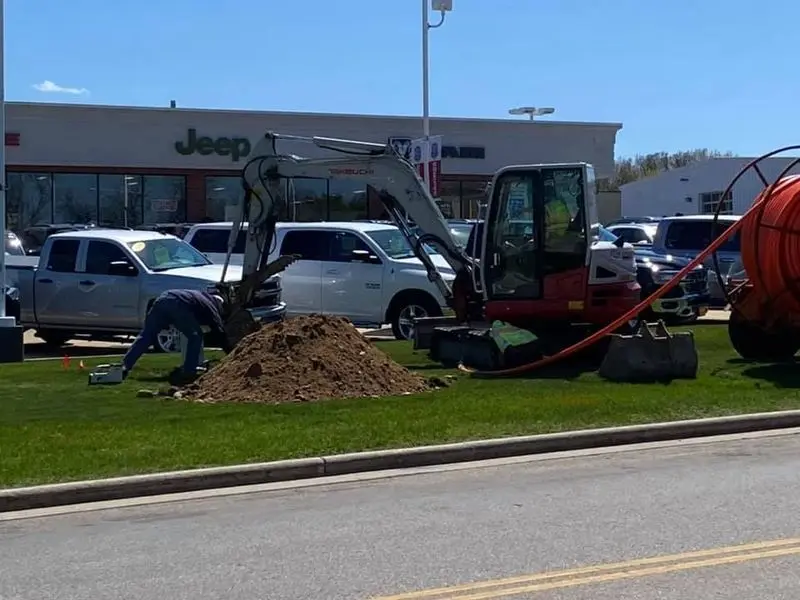
Muskego's surface tells you why directional drilling shows up here so consistently. The lakefront parcels around Big Muskego Lake and Little Muskego Lake have shoreline restrictions that limit surface disturbance within specified distances from the water. Open-cut excavation near the lake is often either prohibited or requires extensive permitting and restoration commitments that make the project impractical. Trenchless drilling addresses this directly. The bore runs at depth without disturbing the surface above it, which keeps the project within the regulatory framework that applies to lakeshore parcels. Learn more about our agricultural well drilling.
The wooded character of many Muskego properties adds another layer. Mature oak, maple, and pine on established lots produce root systems that complicate any excavation work. A vertical bore on a clean spot may be feasible, but the bore path to reach a productive subsurface zone may have to navigate around the root systems of trees that the owner does not want to lose. Directional drilling, with its ability to enter the ground at one location and reach a target at another, gives the placement flexibility that conventional drilling does not.
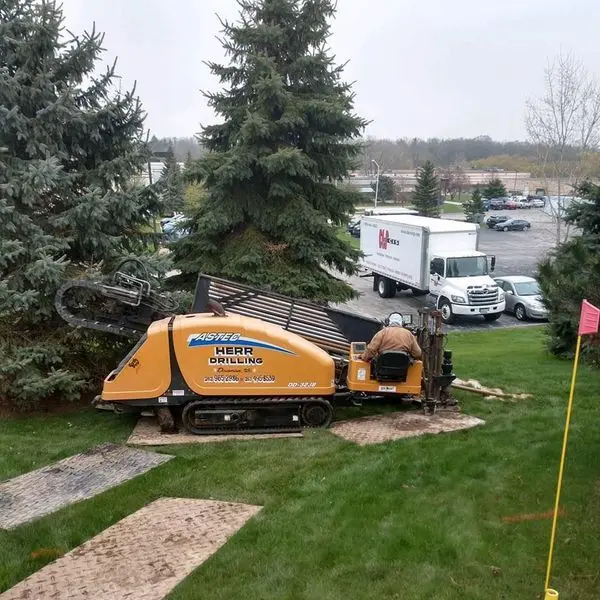
The rural townships south and west of the city present yet another set of conditions. Larger parcels mean longer service line runs from the road. Open-cut trenching across hundreds of feet of established lawn, woodland, or field is impractical on many of these properties. Horizontal directional drilling installs the same line at depth without touching the surface in between. Our crews regularly handle horizontal directional drilling.